Building a Modern Identity for a Legacy Brand
Overview
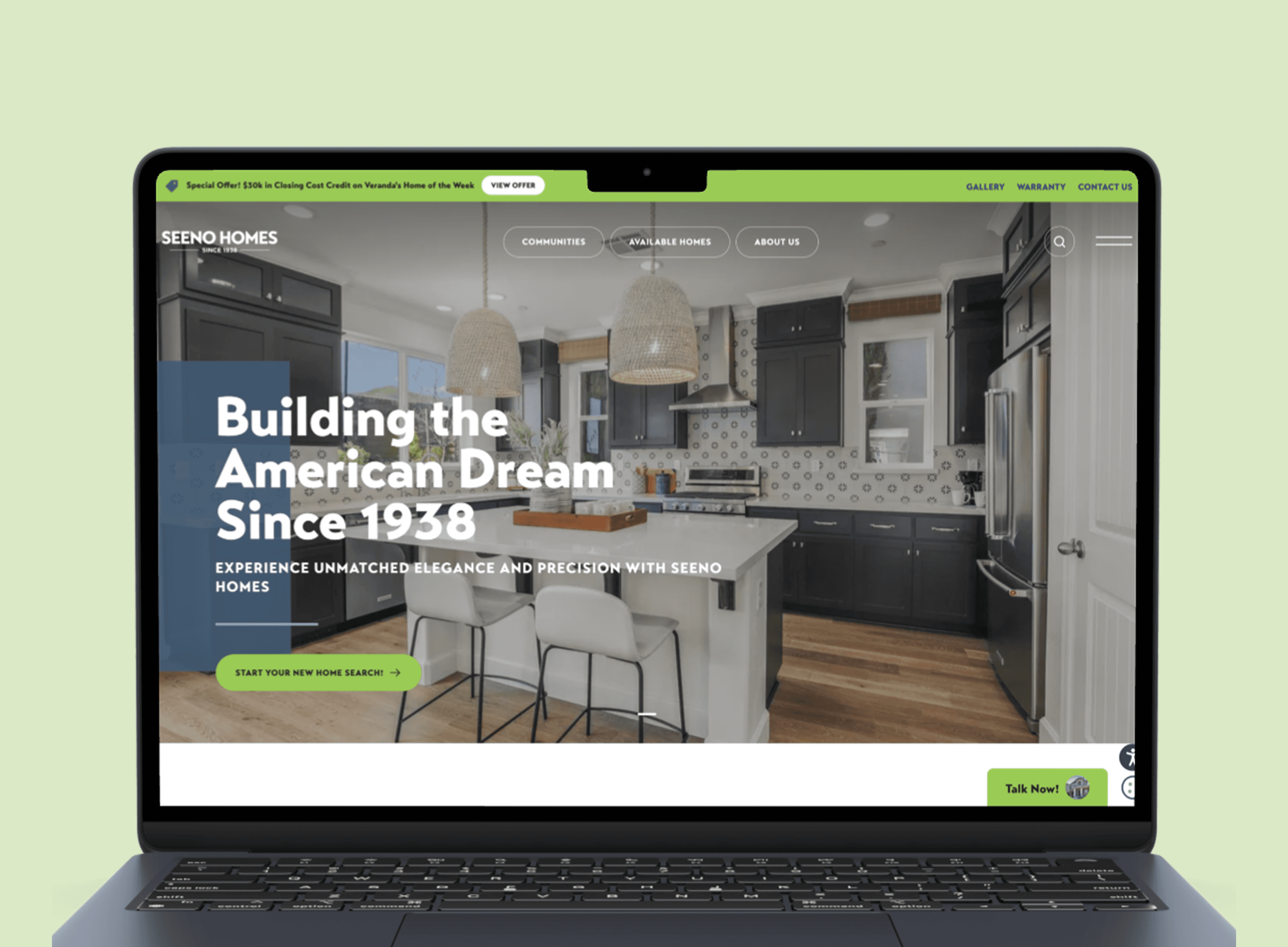
Seeno Homes is a legacy Bay Area homebuilder with over 80 years of history. While the company’s reputation was strong, its website no longer reflected the brand’s evolution, or supported how modern buyers expect to engage with companies online.
This project became the company's first public-facing platform to integrate live sales data, and my first experience stepping into full product ownership under real business pressure.
The Problem
The existing website was outdated and fragmented:
Sales data lived across multiple internal systems
Updates were manual and inconsistent
Accessibility and privacy standards were not fully met
The visual brand no longer matched the company’s direction
Most critically, this redesign would expose internal sales data to the public for the first time, raising the stakes for accuracy and trust.
Constraints
This project came with real-world constraints that shaped every decision:
Legacy systems that had never been integrated into a public platform
Legal and compliance requirements, including California privacy laws and ADA standards
Multiple stakeholders across sales, marketing, IT, and executive leadership
A leadership gap that emerged midway through the project
I was also learning in real time—this was my first website redesign at this scale, and I was balancing it alongside my full-time role as the IT department’s project manager.
My Role & How It Evolved
I wasn’t hired to lead this project. I inserted myself early because I wanted to be in the room.
By October, the marketing manager originally leading the redesign was let go. Without a formal handoff, I stepped into ownership with support from the Vice President, becoming the primary coordinator, decision-driver, and point of accountability alongside my full-time IT role.
From that point on, I became the primary point of contact and accountability, as well as the main decision maker, ensuring the project remained on track, the vision was in alignment with the executive's goals and ultimately to make sure this website would go live.
Key Decisions
1. Modernizing the brand
I helped guide discussions around the new visual identity, collaborating on a color palette that balanced heritage and renewal.
2. Integrating live sales data
One of the biggest challenges was synchronizing four separate sales and listing platforms into a single, accurate flow.
3. Designing for trust and compliance
Partnering with legal, I helped implement privacy controls, ADA-compliant accessibility features, and compliant tracking configurations.
Launch & Impact
The redesigned Seeno Homes website launched on December 20, 2024, with full executive approval.
Results:
~24% increase in organic search traffic
New users more than doubled
Increase in returning users
Higher engagement on key pages
These results validated our UX, SEO, and structural decisions while creating a foundation for ongoing optimization.
What I Learned
This project marked my transition from contributor to owner.
I learned how to step into leadership when structure disappears, balance technical and business constraints, and earn trust through follow-through rather than title. Most importantly, I learned that strong products come from taking responsibility when it matters most.
Building a Modern Identity for a Legacy Brand
Seeno Homes is a legacy Bay Area homebuilder with over 80 years of history. While the company’s reputation was strong, its website no longer reflected the brand’s evolution, or supported how modern buyers expect to engage with companies online.
This project became the company's first public-facing platform to integrate live sales data, and my first experience stepping into full product ownership under real business pressure.
Overview
The existing website was outdated and fragmented:
Sales data lived across multiple internal systems
Updates were manual and inconsistent
Accessibility and privacy standards were not fully met
The visual brand no longer matched the company’s direction
Most critically, this redesign would expose internal sales data to the public for the first time, raising the stakes for accuracy and trust.
The Problem
This project came with real-world constraints that shaped every decision:
Legacy systems that had never been integrated into a public platform
Legal and compliance requirements, including California privacy laws and ADA standards
Multiple stakeholders across sales, marketing, IT, and executive leadership
A leadership gap that emerged midway through the project
I was also learning in real time—this was my first website redesign at this scale, and I was balancing it alongside my full-time role as the IT department’s project manager.
Constraints
I wasn’t hired to lead this project. I inserted myself early because I wanted to be in the room.
By October, the marketing manager originally leading the redesign was let go. Without a formal handoff, I stepped into ownership with support from the Vice President, becoming the primary coordinator, decision-driver, and point of accountability alongside my full-time IT role.
From that point on, I became the primary point of contact and accountability, as well as the main decision maker, ensuring the project remained on track, the vision was in alignment with the executive's goals and ultimately to make sure this website would go live.
My Role &
How It Evolved
Key Decisions
1. Modernizing the brand
I helped guide discussions around the new visual identity, collaborating on a color palette that balanced heritage and renewal.
2. Integrating live sales data
One of the biggest challenges was synchronizing four separate sales and listing platforms into a single, accurate flow.
3. Designing for trust and compliance
Partnering with legal, I helped implement privacy controls, ADA-compliant accessibility features, and compliant tracking configurations.
Building a Modern Identity for a Legacy Brand
Overview
Seeno Homes is a legacy Bay Area homebuilder with over 80 years of history. While the company’s reputation was strong, its website no longer reflected the brand’s evolution, or supported how modern buyers expect to engage with companies online.
This project became the company's first public-facing platform to integrate live sales data, and my first experience stepping into full product ownership under real business pressure.
The Problem
The existing website was outdated and fragmented:
Sales data lived across multiple internal systems
Updates were manual and inconsistent
Accessibility and privacy standards were not fully met
The visual brand no longer matched the company’s direction
Most critically, this redesign would expose internal sales data to the public for the first time, raising the stakes for accuracy and trust.
Constraints
This project came with real-world constraints that shaped every decision:
Legacy systems that had never been integrated into a public platform
Legal and compliance requirements, including California privacy laws and ADA standards
Multiple stakeholders across sales, marketing, IT, and executive leadership
A leadership gap that emerged midway through the project
I was also learning in real time—this was my first website redesign at this scale, and I was balancing it alongside my full-time role as the IT department’s project manager.
My Role & How It Evolved
I wasn’t hired to lead this project. I inserted myself early because I wanted to be in the room.
By October, the marketing manager originally leading the redesign was let go. Without a formal handoff, I stepped into ownership with support from the Vice President, becoming the primary coordinator, decision-driver, and point of accountability alongside my full-time IT role.
From that point on, I became the primary point of contact and accountability, as well as the main decision maker, ensuring the project remained on track, the vision was in alignment with the executive's goals and ultimately to make sure this website would go live.
Key Decisions
1. Modernizing the brand
I helped guide discussions around the new visual identity, collaborating on a color palette that balanced heritage and renewal.
2. Integrating live sales data
One of the biggest challenges was synchronizing four separate sales and listing platforms into a single, accurate flow.
3. Designing for trust and compliance
Partnering with legal, I helped implement privacy controls, ADA-compliant accessibility features, and compliant tracking configurations.