Rebuilding Sierra Pacific's Website & Digital Presence
OVERVIEW
A legacy company with an outdated digital presence
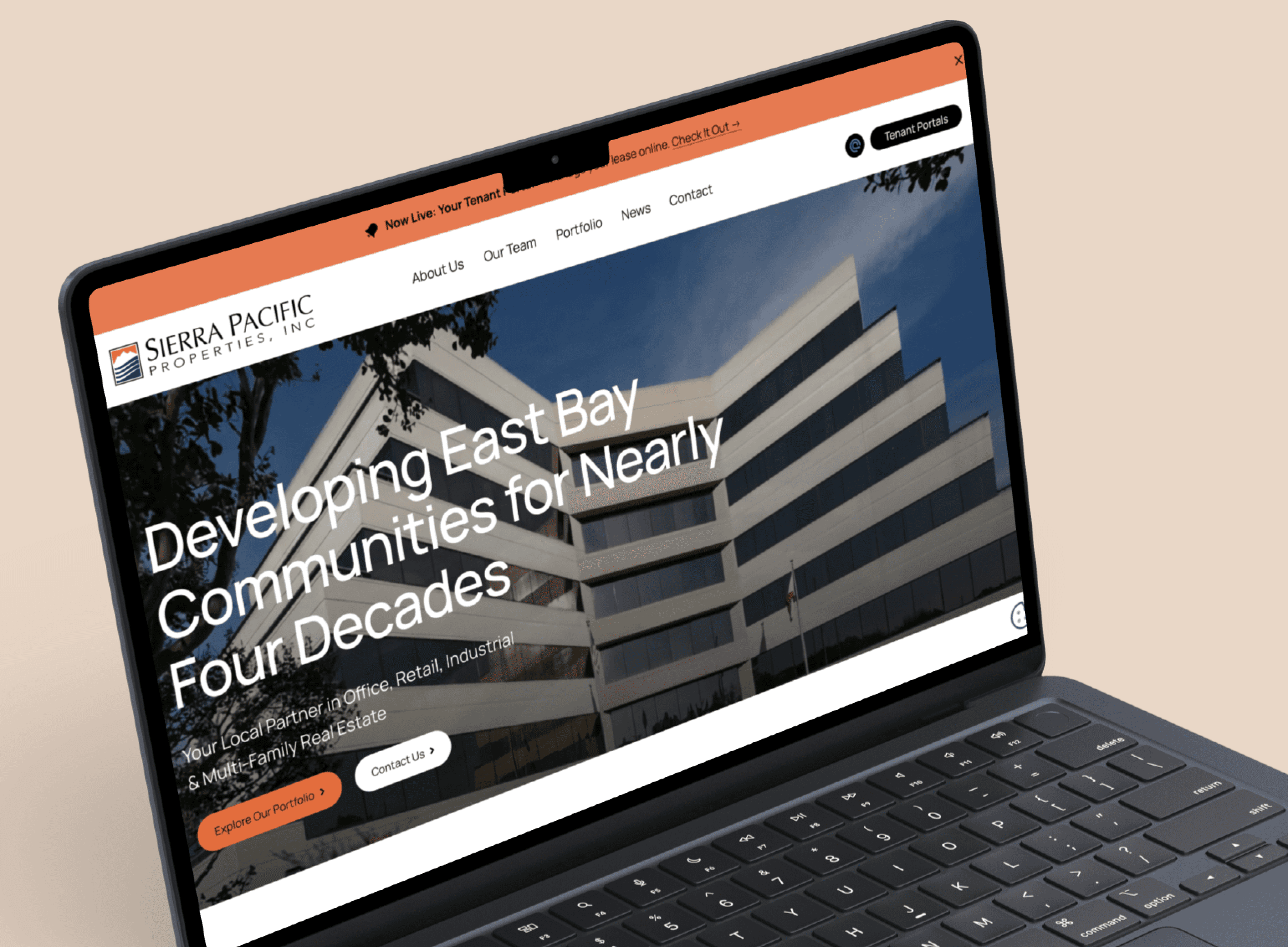
Sierra Pacific Properties (SPPI) does it all. They are a developer, owner, and operator of commercial real estate in the East Bay, spread across office buildings, business parks, shopping centers, and multi-family residential communities. With nearly four decades of presence in the Concord and Solano County markets, the company's community presence was strong, however they lacked any real online presence.
When I first joined the project, their website consisted of a stripped down home page and outdated HTML pages displaying their contact page and property categories. Their portfolio pages were outdated and had inaccurate information displayed. The goal I was positioned with taking over, was to redesign the SPPI website to position the company as a reliable, legitimate, and trustworthy presence in the Northern California commercial property market.
SPPI's existing website was severely underutilized — a home page, a contact page, and a link tree — failing to showcase 40 years of community development or support how modern tenants, employees, and vendors research and engage with companies online.
• Decision makers who were unsure what they wanted

• Stakeholders who were nervous about their public image

• Leading and managing an entire project from end-to-end for the first time
rebuild SPPI's digital presence in a way that earns trust from first-time visitors, without losing the authenticity that has defined the company for 40 years?
DISCOVER
Understanding the current market trends
Phase 1 (February – March) was entirely devoted to discovery. Before any design work began, I needed to understand where SPPI stood analytically, competitively, and organizationally, and what a modern commercial real estate website actually needed to do for its users.
PHASE 1
Discovery & Research
Feb 3 - Feb 28
PHASE 2
Design
Mar 3 - Apr 4
PHASE 3
Development
Apr 7 - Jun 6
PHASE 4
Testing & Launch
Jun 9 - Jun 30
My research covered three areas:
an audit of SPPI's existing website and social media accounts
an analytics review of current traffic and user behavior
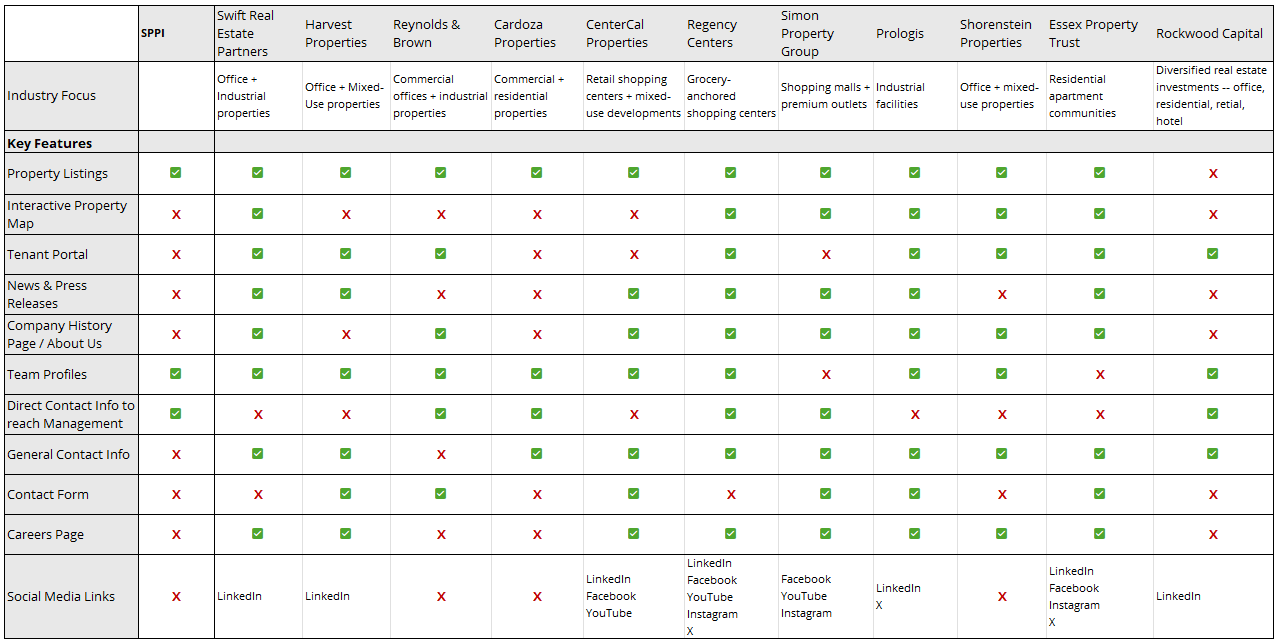
a competitive analysis of comparable commercial property websites.
What the Audit Revealed
Phase 1 (February – March) was entirely devoted to discovery. Before any design work began, I needed to understand where SPPI stood analytically, competitively, and organizationally, and what a modern commercial real estate website actually needed to do for its users.
02
03
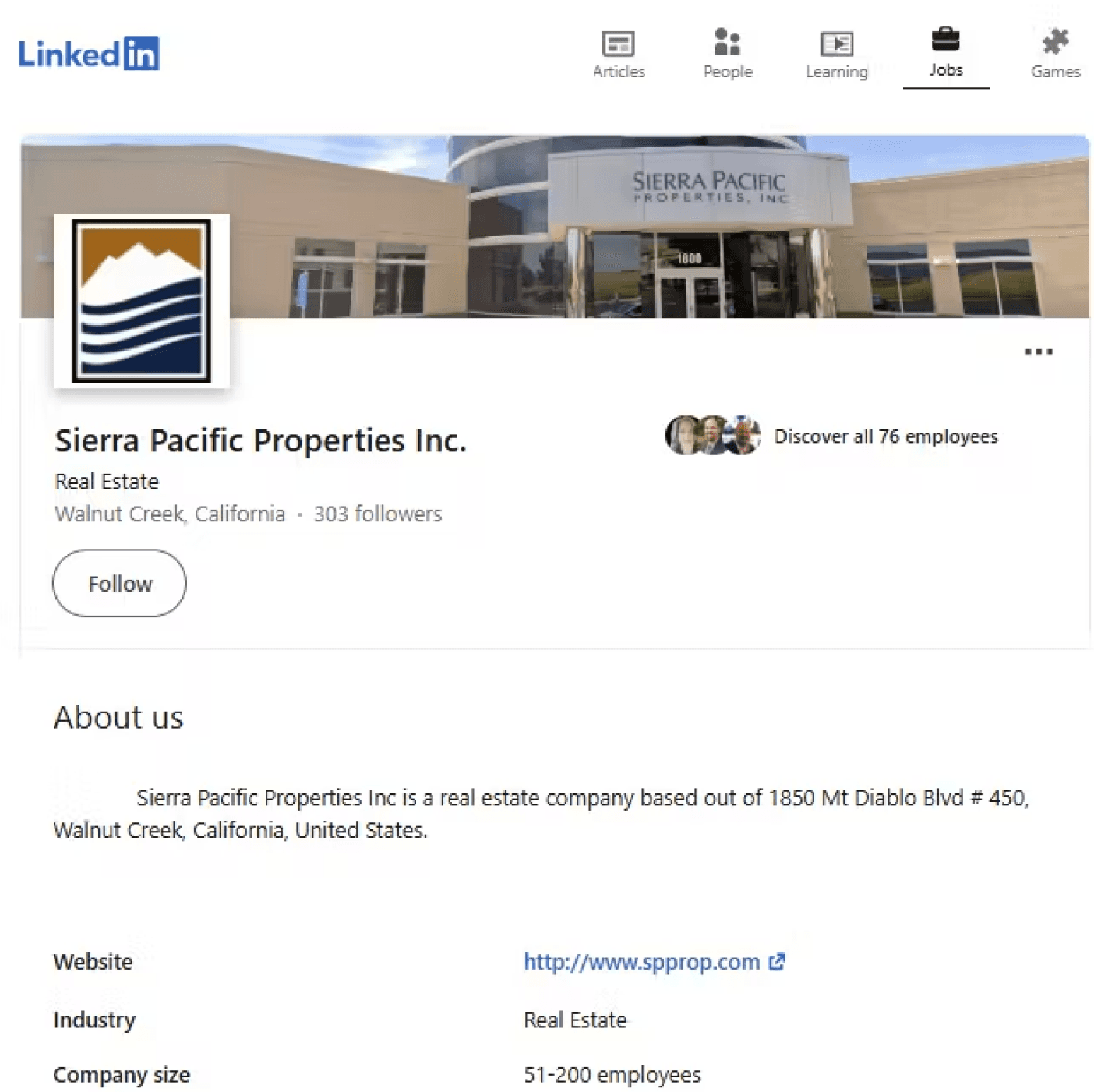
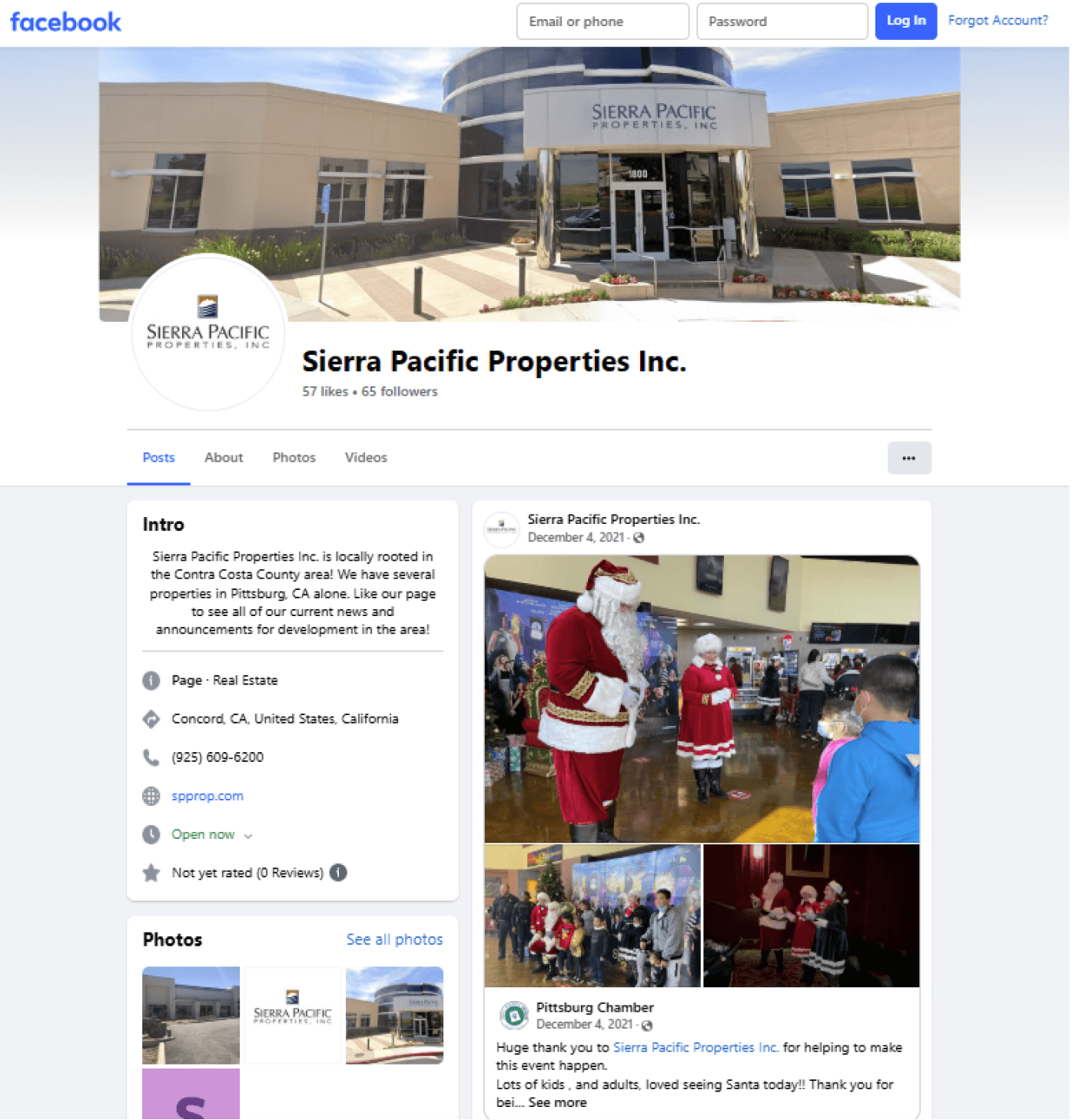
Both LinkedIn and Facebook accounts existed but were inconsistent and low-engagement — used sporadically, with no unified content strategy or visual system connecting them to the main site.
Key Decisions
1. Modernizing the brand
I helped guide discussions around the new visual identity, collaborating on a color palette that balanced heritage and renewal.
2. Integrating live sales data
One of the biggest challenges was synchronizing four separate sales and listing platforms into a single, accurate flow.
3. Designing for trust and compliance
Partnering with legal, I helped implement privacy controls, ADA-compliant accessibility features, and compliant tracking configurations.
Launch & Impact
The redesigned Seeno Homes website launched on December 20, 2024, with full executive approval.
Results:
~24% increase in organic search traffic
New users more than doubled
Increase in returning users
Higher engagement on key pages
These results validated our UX, SEO, and structural decisions while creating a foundation for ongoing optimization.
What I Learned
This project marked my transition from contributor to owner.
I learned how to step into leadership when structure disappears, balance technical and business constraints, and earn trust through follow-through rather than title. Most importantly, I learned that strong products come from taking responsibility when it matters most.
Rebuilding Sierra Pacific's Website & Digital Presence
Sierra Pacific Properties (SPPI) does it all. They are a developer, owner, and operator of commercial real estate in the East Bay, spread across office buildings, business parks, shopping centers, and multi-family residential communities. With nearly four decades of presence in the Concord and Solano County markets, the company's community presence was strong, however they lacked any real online presence.
When I first joined the project, their website consisted of a stripped down home page and outdated HTML pages displaying their contact page and property categories. Their portfolio pages were outdated and had inaccurate information displayed. The goal I was positioned with taking over, was to redesign the SPPI website to position the company as a reliable, legitimate, and trustworthy presence in the Northern California commercial property market.
Overview
The existing website was outdated and fragmented:
Sales data lived across multiple internal systems
Updates were manual and inconsistent
Accessibility and privacy standards were not fully met
The visual brand no longer matched the company’s direction
Most critically, this redesign would expose internal sales data to the public for the first time, raising the stakes for accuracy and trust.
The Problem
This project came with real-world constraints that shaped every decision:
Legacy systems that had never been integrated into a public platform
Legal and compliance requirements, including California privacy laws and ADA standards
Multiple stakeholders across sales, marketing, IT, and executive leadership
A leadership gap that emerged midway through the project
I was also learning in real time—this was my first website redesign at this scale, and I was balancing it alongside my full-time role as the IT department’s project manager.
Constraints
I wasn’t hired to lead this project. I inserted myself early because I wanted to be in the room.
By October, the marketing manager originally leading the redesign was let go. Without a formal handoff, I stepped into ownership with support from the Vice President, becoming the primary coordinator, decision-driver, and point of accountability alongside my full-time IT role.
From that point on, I became the primary point of contact and accountability, as well as the main decision maker, ensuring the project remained on track, the vision was in alignment with the executive's goals and ultimately to make sure this website would go live.
My Role &
How It Evolved
Key Decisions
1. Modernizing the brand
I helped guide discussions around the new visual identity, collaborating on a color palette that balanced heritage and renewal.
2. Integrating live sales data
One of the biggest challenges was synchronizing four separate sales and listing platforms into a single, accurate flow.
3. Designing for trust and compliance
Partnering with legal, I helped implement privacy controls, ADA-compliant accessibility features, and compliant tracking configurations.
Launch & Impact
The redesigned Seeno Homes website launched on December 20, 2024, with full executive approval.
Results:
~24% increase in organic search traffic
New users more than doubled
Increase in returning users
Higher engagement on key pages
These results validated our UX, SEO, and structural decisions while creating a foundation for ongoing optimization.
Rebuilding Sierra Pacific's Website & Digital Presence
Overview
Sierra Pacific Properties (SPPI) does it all. They are a developer, owner, and operator of commercial real estate in the East Bay, spread across office buildings, business parks, shopping centers, and multi-family residential communities. With nearly four decades of presence in the Concord and Solano County markets, the company's community presence was strong, however they lacked any real online presence.
When I first joined the project, their website consisted of a stripped down home page and outdated HTML pages displaying their contact page and property categories. Their portfolio pages were outdated and had inaccurate information displayed. The goal I was positioned with taking over, was to redesign the SPPI website to position the company as a reliable, legitimate, and trustworthy presence in the Northern California commercial property market.
The Problem
The existing website was outdated and fragmented:
Sales data lived across multiple internal systems
Updates were manual and inconsistent
Accessibility and privacy standards were not fully met
The visual brand no longer matched the company’s direction
Most critically, this redesign would expose internal sales data to the public for the first time, raising the stakes for accuracy and trust.
Constraints
This project came with real-world constraints that shaped every decision:
Legacy systems that had never been integrated into a public platform
Legal and compliance requirements, including California privacy laws and ADA standards
Multiple stakeholders across sales, marketing, IT, and executive leadership
A leadership gap that emerged midway through the project
I was also learning in real time—this was my first website redesign at this scale, and I was balancing it alongside my full-time role as the IT department’s project manager.
My Role & How It Evolved
I wasn’t hired to lead this project. I inserted myself early because I wanted to be in the room.
By October, the marketing manager originally leading the redesign was let go. Without a formal handoff, I stepped into ownership with support from the Vice President, becoming the primary coordinator, decision-driver, and point of accountability alongside my full-time IT role.
From that point on, I became the primary point of contact and accountability, as well as the main decision maker, ensuring the project remained on track, the vision was in alignment with the executive's goals and ultimately to make sure this website would go live.
Key Decisions
1. Modernizing the brand
I helped guide discussions around the new visual identity, collaborating on a color palette that balanced heritage and renewal.
2. Integrating live sales data
One of the biggest challenges was synchronizing four separate sales and listing platforms into a single, accurate flow.
3. Designing for trust and compliance
Partnering with legal, I helped implement privacy controls, ADA-compliant accessibility features, and compliant tracking configurations.
Launch & Impact
The redesigned Seeno Homes website launched on December 20, 2024, with full executive approval.
Results:
~24% increase in organic search traffic
New users more than doubled
Increase in returning users
Higher engagement on key pages
These results validated our UX, SEO, and structural decisions while creating a foundation for ongoing optimization.