WeCare Hackathon Challenge, Addressing Burnout in Healthcare
CONTEXT
The Pitt Challenge
ROLE
UX Designer and Project Lead
TOOLS
Android Studio, Back4App, Java, Figma
TimELINE
October 2021
(40 hours)
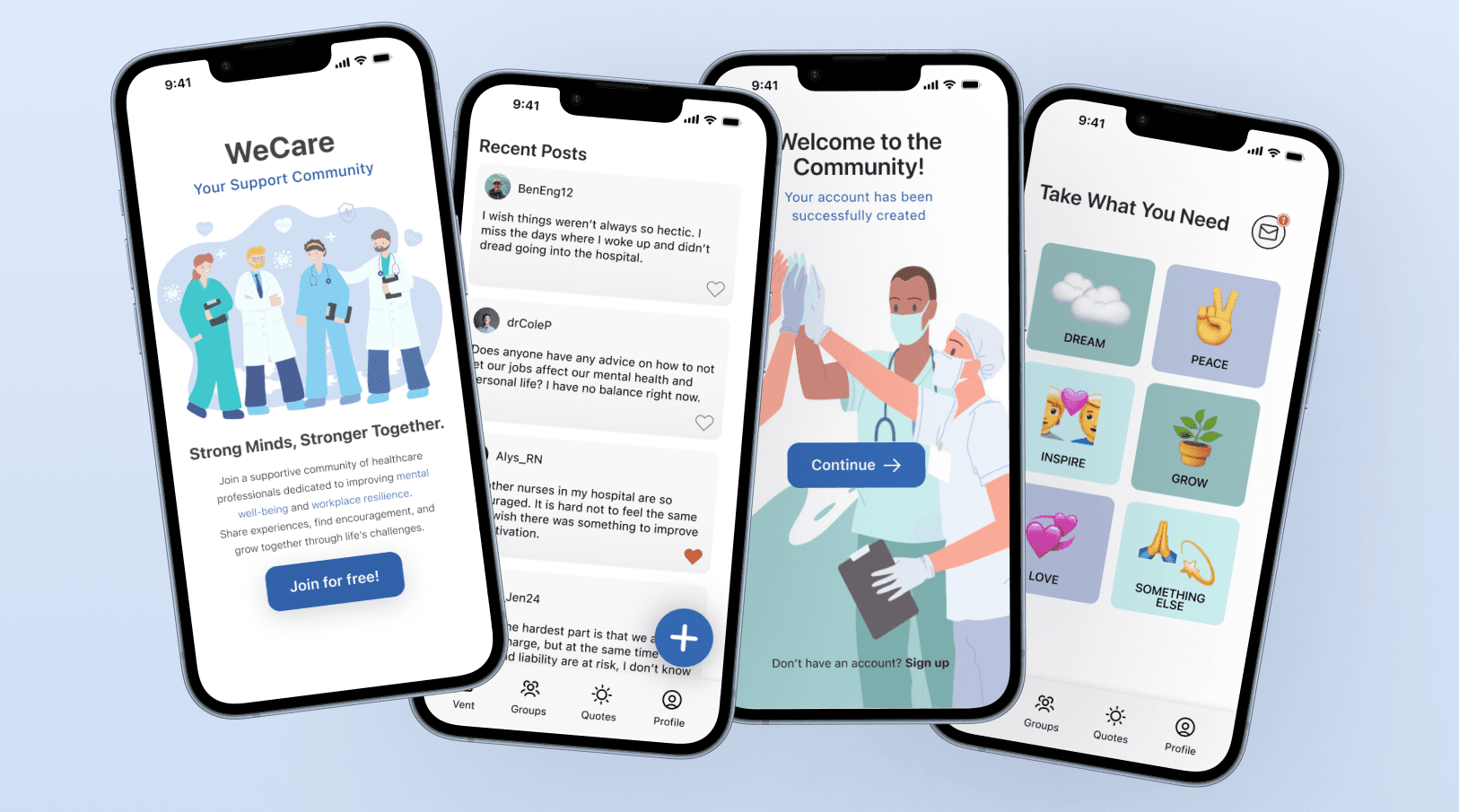
Overview
During the COVID-19 pandemic, healthcare workers faced extreme burnout, isolation, and emotional fatigue—yet few digital tools were designed specifically to support their mental well-being.
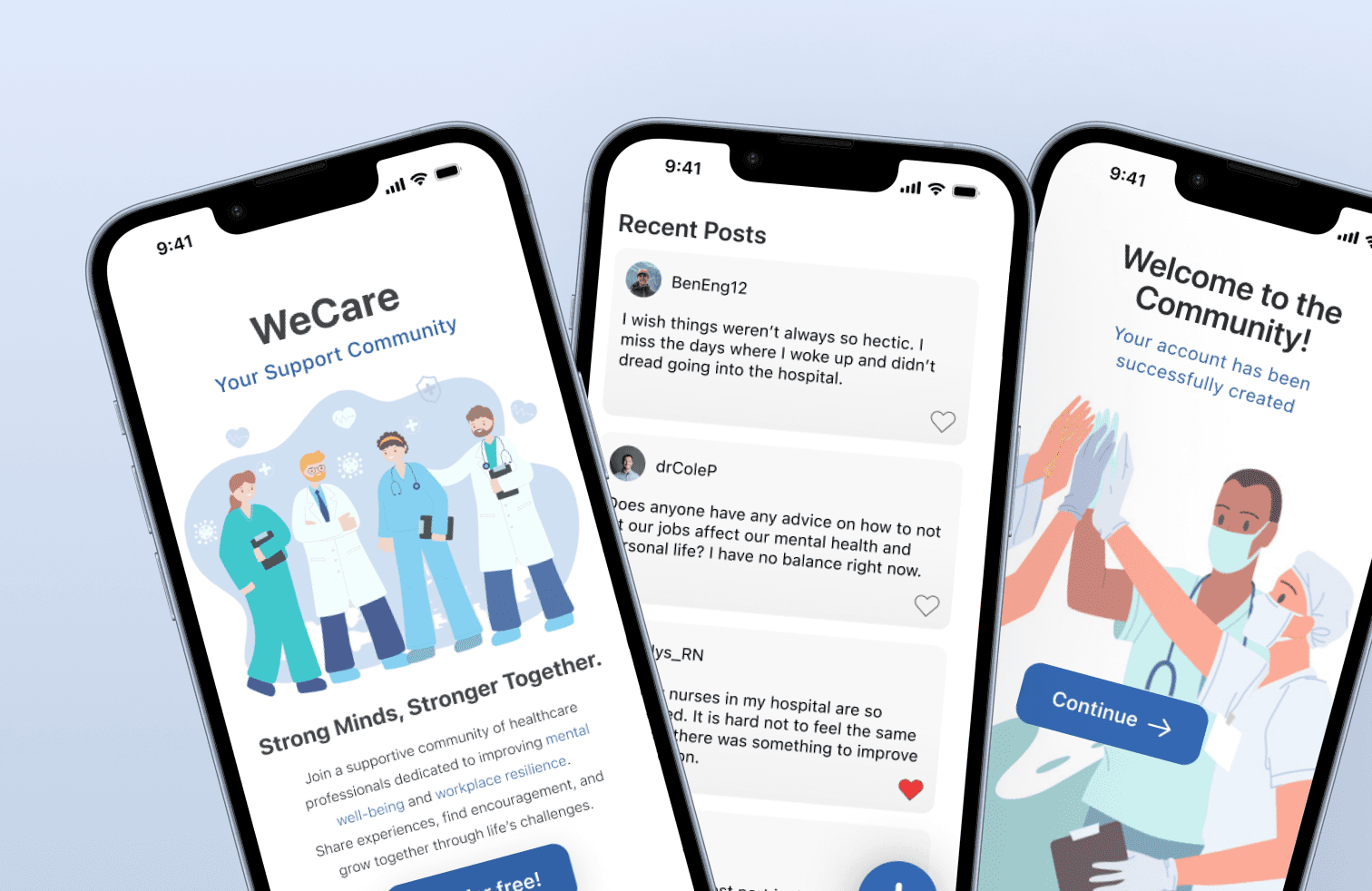
At my first-ever hackathon, I stepped outside my comfort zone to help build WeCare: a community-driven platform designed to help healthcare professionals connect, decompress, and prioritize self-care during periods of social isolation.
The Problem
Healthcare workers were expected to care for others while quietly carrying the weight of burnout themselves.
Existing platforms:
Weren’t tailored to healthcare professionals
Lacked a sense of shared understanding and peer support
Didn’t normalize rest, reflection, or vulnerability
We set out to design a space that felt safe, human, and supportive—even when users were physically isolated.
My Role
I proposed the initial concept for WeCare, inspired by conversations with my mom (a nurse) and my sister (a COVID researcher), who both spoke about how isolating the pandemic felt inside the healthcare system.
This project pushed me well outside my comfort zone:
It was my first hackathon
My first time using Figma
My first experience translating an idea into a working product under extreme time pressure
I learned Figma during the hackathon itself and led the product and design direction by:
Defining the core concept and feature set
Creating initial sketches and low-fidelity wireframes
Designing the app interface as the prototype evolved
Helping shape and deliver the final presentation to judges
The Process
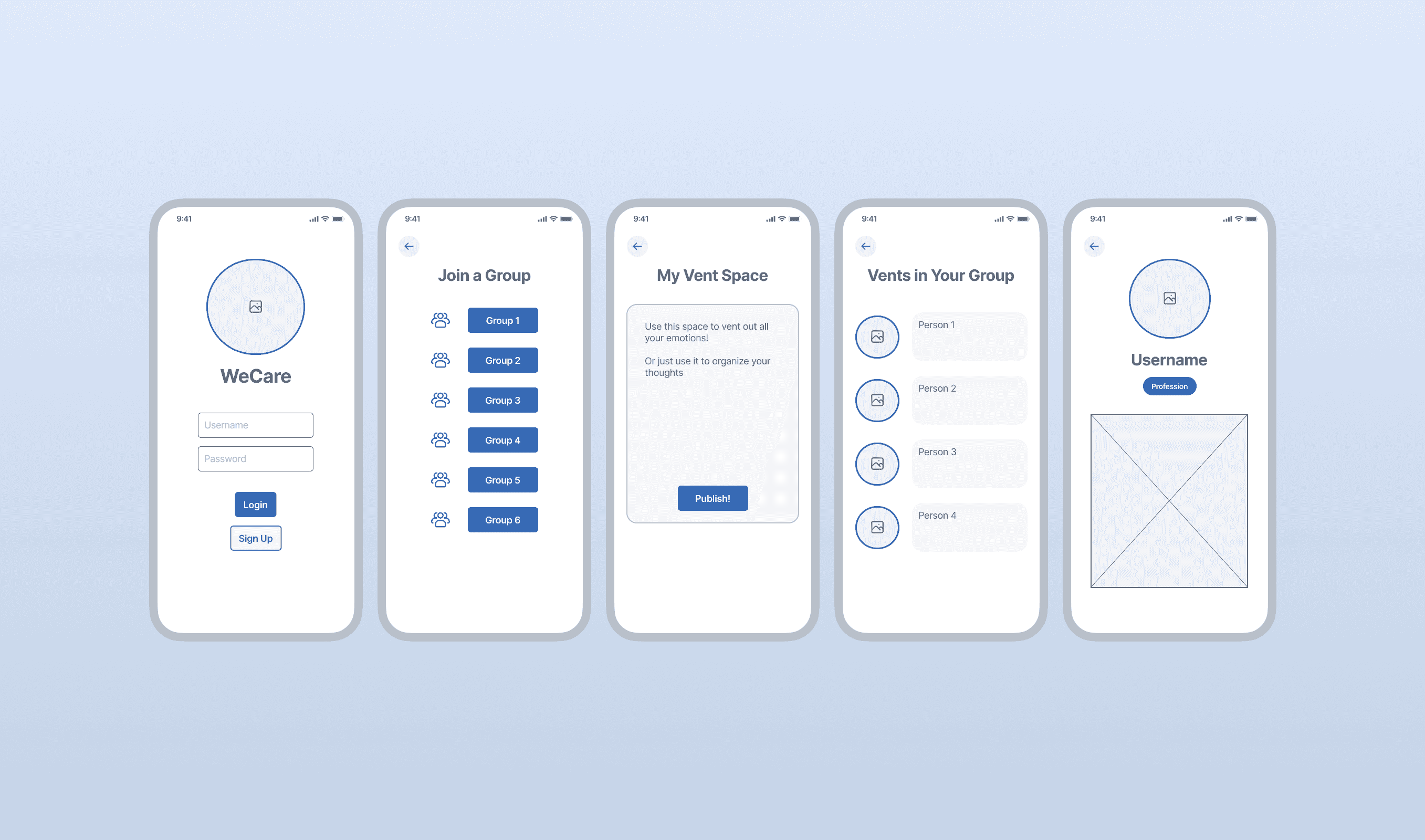
Concept sketching
Framed the app as a Reddit-like community centered around shared experiences and emotional support.
Low-fidelity wireframes
Established structure, hierarchy, and simplicity.
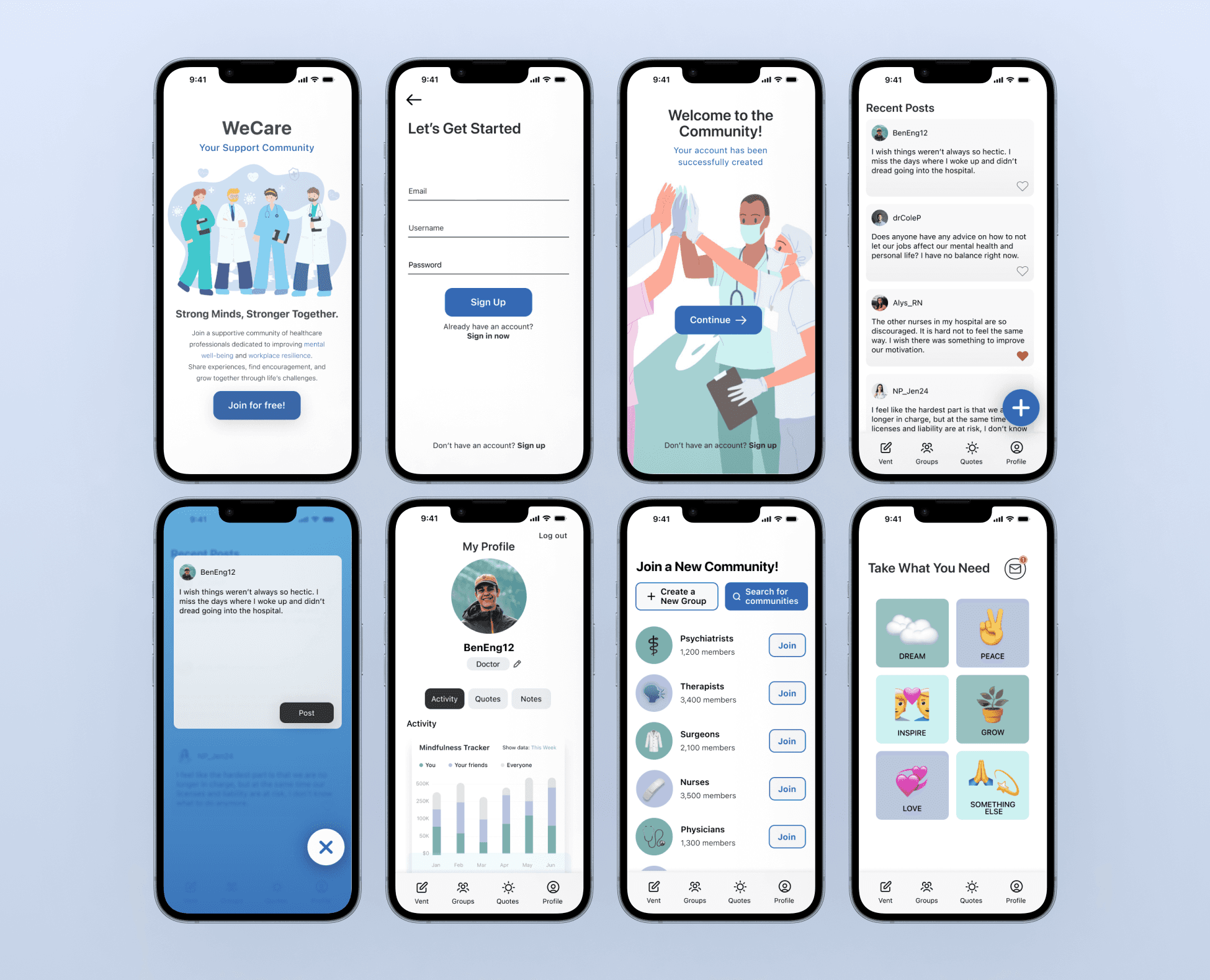
UI design
Refined visual consistency and interaction details as the prototype took shape.
Outcome
WeCare won 1st place in the Mental Health During Social Isolation track.
For me, the win validated something even bigger than the idea itself: that I could quickly learn new tools, collaborate under pressure, and turn empathy into a tangible product—despite having no prior hackathon or Figma experience.
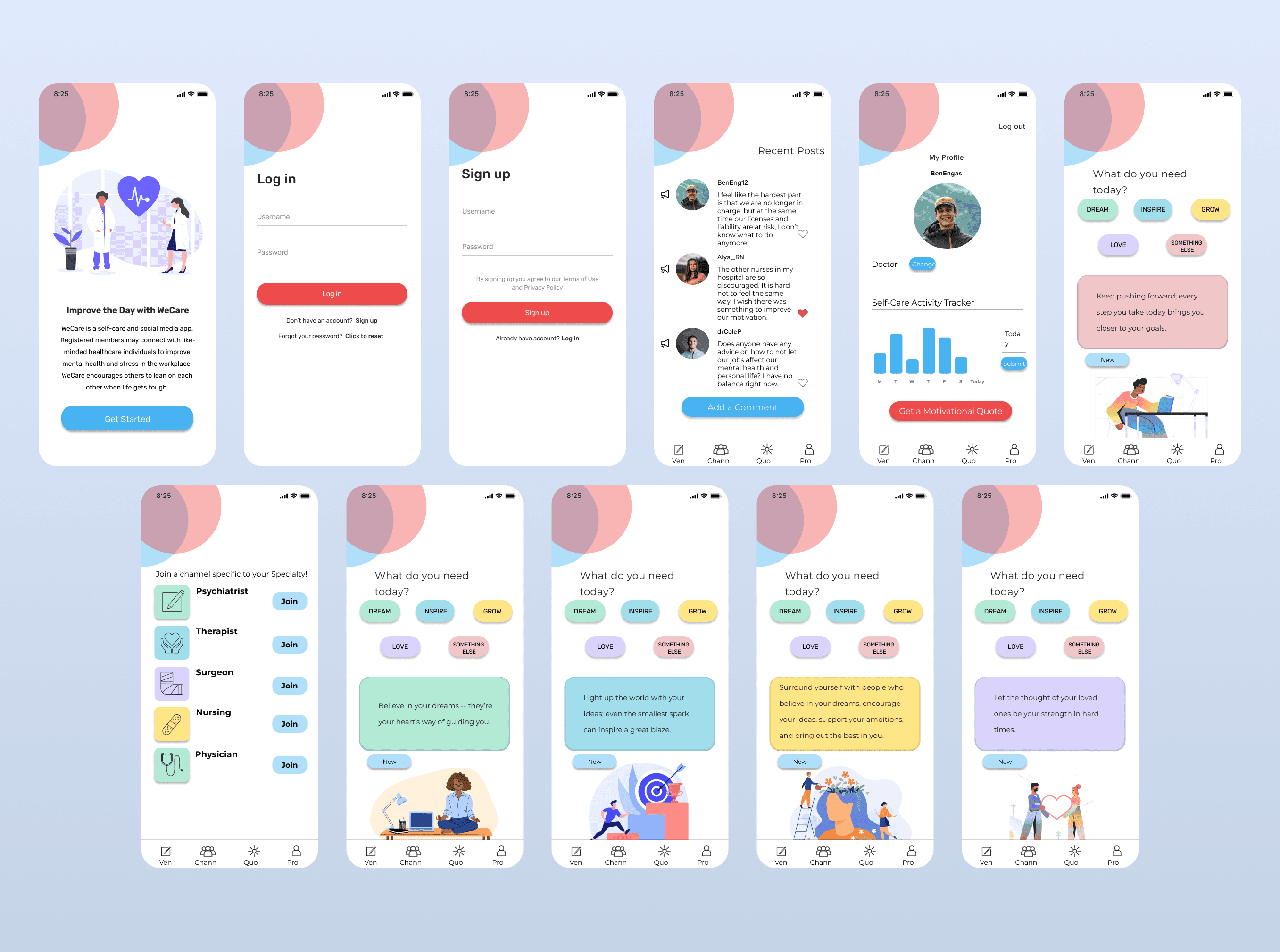
Iteration & Reflection
After the hackathon, I revisited the project and redesigned key flows in Figma, improving onboarding, expanding community features, and refining the overall experience.
This project marked a turning point for me. It showed me that growth often comes from saying yes before you feel fully ready—and that meaningful products start with listening, learning fast, and iterating with intention.
WeCare was my first real step into product thinking. It sparked my interest in product management by showing how design, psychology, and technology can come together to support people during vulnerable moments.
WeCare, Addressing Burnout in Healthcare
Seeno Homes is a legacy Bay Area homebuilder with over 80 years of history. While the company’s reputation was strong, its website no longer reflected the brand’s evolution, or supported how modern buyers expect to engage with companies online.
This project became the company's first public-facing platform to integrate live sales data, and my first experience stepping into full product ownership under real business pressure.
Overview
The existing website was outdated and fragmented:
Sales data lived across multiple internal systems
Updates were manual and inconsistent
Accessibility and privacy standards were not fully met
The visual brand no longer matched the company’s direction
Most critically, this redesign would expose internal sales data to the public for the first time, raising the stakes for accuracy and trust.
The Problem
This project came with real-world constraints that shaped every decision:
Legacy systems that had never been integrated into a public platform
Legal and compliance requirements, including California privacy laws and ADA standards
Multiple stakeholders across sales, marketing, IT, and executive leadership
A leadership gap that emerged midway through the project
I was also learning in real time—this was my first website redesign at this scale, and I was balancing it alongside my full-time role as the IT department’s project manager.
Constraints
I wasn’t hired to lead this project. I inserted myself early because I wanted to be in the room.
By October, the marketing manager originally leading the redesign was let go. Without a formal handoff, I stepped into ownership with support from the Vice President, becoming the primary coordinator, decision-driver, and point of accountability alongside my full-time IT role.
From that point on, I became the primary point of contact and accountability, as well as the main decision maker, ensuring the project remained on track, the vision was in alignment with the executive's goals and ultimately to make sure this website would go live.
My Role &
How It Evolved
Key Decisions
1. Modernizing the brand
I helped guide discussions around the new visual identity, collaborating on a color palette that balanced heritage and renewal.
2. Integrating live sales data
One of the biggest challenges was synchronizing four separate sales and listing platforms into a single, accurate flow.
3. Designing for trust and compliance
Partnering with legal, I helped implement privacy controls, ADA-compliant accessibility features, and compliant tracking configurations.
WeCare, Addressing Burnout in Healthcare
Overview
During the COVID-19 pandemic, healthcare workers faced extreme burnout, isolation, and emotional fatigue—yet few digital tools were designed specifically to support their mental well-being.
At my first-ever hackathon, I stepped outside my comfort zone to help build WeCare: a community-driven platform designed to help healthcare professionals connect, decompress, and prioritize self-care during periods of social isolation.
The Problem
Healthcare workers were expected to care for others while quietly carrying the weight of burnout themselves.
Existing platforms:
Weren’t tailored to healthcare professionals
Lacked a sense of shared understanding and peer support
Didn’t normalize rest, reflection, or vulnerability
We set out to design a space that felt safe, human, and supportive—even when users were physically isolated.
Outcome
WeCare won 1st place in the Mental Health During Social Isolation track.
For me, the win validated something even bigger than the idea itself: that I could quickly learn new tools, collaborate under pressure, and turn empathy into a tangible product—despite having no prior hackathon or Figma experience.
My Role
I proposed the initial concept for WeCare, inspired by conversations with my mom (a nurse) and my sister (a COVID researcher), who both spoke about how isolating the pandemic felt inside the healthcare system.
This project pushed me well outside my comfort zone:
It was my first hackathon
My first time using Figma
My first experience translating an idea into a working product under extreme time pressure
I learned Figma during the hackathon itself and led the product and design direction by:
Defining the core concept and feature set
Creating initial sketches and low-fidelity wireframes
Designing the app interface as the prototype evolved
Helping shape and deliver the final presentation to judges
The Process
Concept sketching
Framed the app as a Reddit-like community centered around shared experiences and emotional support.
Low-fidelity wireframes
Established structure, hierarchy, and simplicity.
UI Design
Refined visual consistency and interaction details as the prototype took shape.
Iteration & Reflection
After the hackathon, I revisited the project and redesigned key flows in Figma, improving onboarding, expanding community features, and refining the overall experience.
This project marked a turning point for me. It showed me that growth often comes from saying yes before you feel fully ready—and that meaningful products start with listening, learning fast, and iterating with intention.
WeCare was my first real step into product thinking. It sparked my interest in product management by showing how design, psychology, and technology can come together to support people during vulnerable moments.